

Painless But Not Harmless: When a Lump Could Be Soft Tissue Sarcoma, According to an Orthopaedic Oncologist
05 March 2026
Many people believe that a lump is harmless if it does not cause pain.
However, this is not always true. Some cancers, including soft tissue sarcoma, may first appear as a painless lump that slowly increases in size.
Soft tissue sarcoma is a rare cancer that develops in the body's soft tissues, such as muscle, fat, nerves, and connective tissue. Because these tumours often do not cause pain in the early stages, they may go unnoticed or be mistaken for benign lumps.
In some cases, lumps are surgically removed without proper imaging or biopsy. When the lump later turns out to be cancerous, treatment can become more complicated than if it had been properly assessed from the beginning.
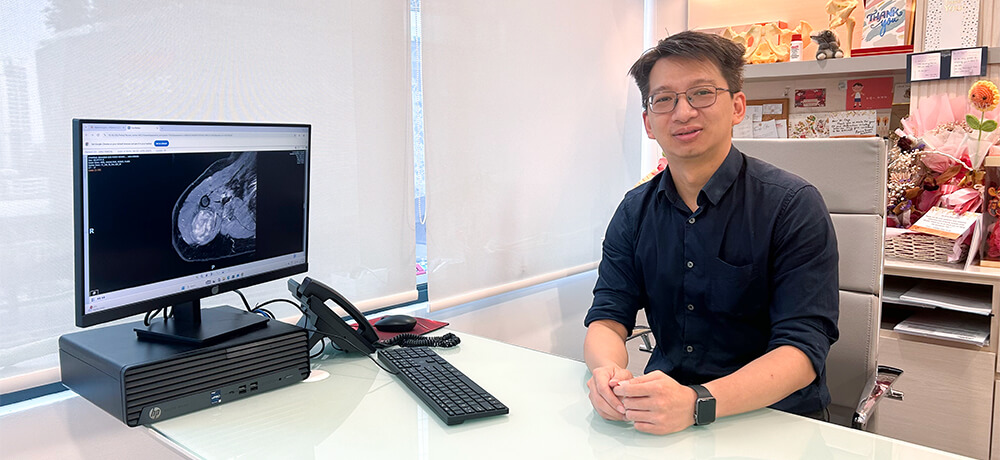
To shed more light on this often overlooked condition, Dr Tie Teck Liang, Consultant Orthopaedic & Orthopaedic Oncology Surgeon, shares the warning signs to watch for and what patients should do if they notice a suspicious lump.
Common Symptoms of Soft Tissue Sarcoma
According to Dr Tie, many patients with soft tissue sarcoma initially notice a painless lump somewhere on their body. Pain is not always present in the early stages.
“Symptoms may only appear when the tumour grows large enough to compress nearby nerves, blood vessels, or other structures,” he explains.
Soft tissue sarcomas most commonly occur in the arms and legs, but they can also develop in the trunk, abdomen, and other parts of the body.
The growth pattern of these tumours can vary. Some grow slowly at first, while others may enlarge more rapidly over time.
Dr Tie advises that any lump should be assessed by a specialist if it has the following warning signs:
- Larger than 5 cm (about the size of a golf ball)
- Increasing in size over time
- Painful
- Located deep under the skin
How Is Soft Tissue Sarcoma Diagnosed?
When a suspicious lump is identified, imaging is usually the first step in evaluation.
MRI is the preferred imaging test for assessing soft tissue masses because it provides detailed information about the tumour and its relationship with surrounding muscles, nerves, and blood vessels.
However, imaging alone cannot confirm whether a tumour is cancerous.
“If the MRI shows features that raise concern for sarcoma, a carefully planned biopsy is performed to obtain a tissue sample,” says Dr Tie.
The biopsy allows pathologists to determine whether the tumour is benign or malignant and helps guide the most appropriate treatment plan.
The Importance of Proper Soft Tissue Sarcoma Diagnosis and Treatment
Surgery is the main treatment for most soft tissue sarcomas.
However, these tumours must be removed using a specialised technique known as wide excision, where the tumour is removed together with a margin of normal tissue around it. This is important to reduce the risk of leaving behind microscopic cancer cells.
Dr Tie explains that when a lump is removed without proper planning or imaging — sometimes called an “unplanned excision” or “Whoops surgery” — tumour cells may be left behind or spread to surrounding tissues.
“When this happens, patients often require a second operation, which can be more complex and may involve larger resections or reconstruction,” he explains.
Dr Tie has treated patients whose lumps were removed elsewhere without proper evaluation, only to later discover that they were soft tissue sarcomas.
In one case, a patient had a small tumour on the foot measuring only 2 cm removed without prior imaging or biopsy. When the diagnosis of sarcoma was later confirmed, the tumour had already contaminated surrounding tissues.
As a result, the patient required a much more extensive surgery, which ultimately involved amputation of the foot.
Don’t Ignore a Suspicious Lump
Early diagnosis and proper surgical planning are critical when managing soft tissue sarcoma.
“When these tumours are detected early and removed correctly the first time, surgery alone may often be sufficient treatment,” says Dr Tie.
If you notice a lump that is growing, larger than 5 cm, or causing concern, it is important to seek medical evaluation rather than ignoring it. A proper assessment by an experienced specialist can help ensure the most appropriate treatment from the start.
If you are concerned about a growing lump, click below to schedule a consultation with our Consultant Orthopaedic & Orthopaedic Oncology Surgeon.


