

Why Your Acne Is Not Improving, Even with Skincare
14 July 2026
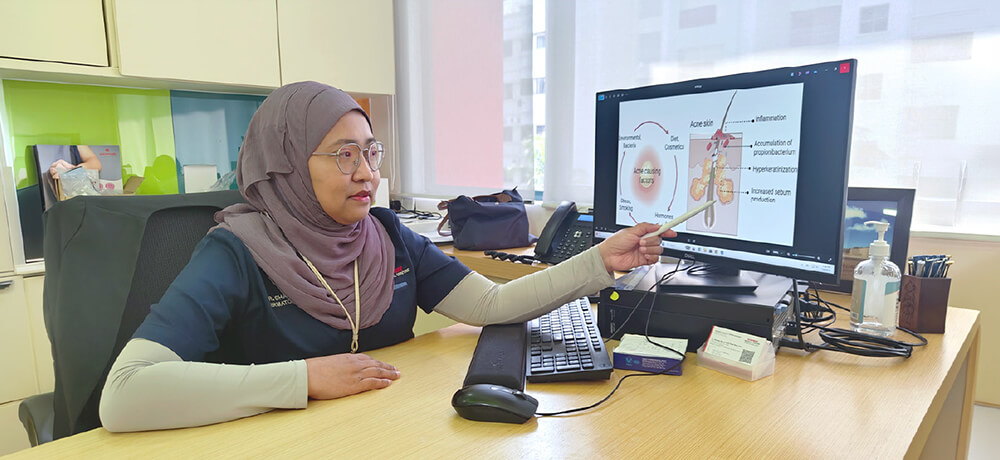
Struggling with breakouts that just don’t seem to go away, despite trying multiple skincare products? If you’ve been layering cleansers, serums, spot treatments and still seeing new pimples appear, it may be time to rethink your approach.
Acne is not simply a “skin surface” problem. It is a complex inflammatory skin condition that can be influenced by hormones, genetics, lifestyle, and even stress. The good news is that acne can be effectively managed with the right diagnosis and treatment plan.
Dr Sharifah Rosniza Binti Syed Nong Chek, Consultant Dermatologist, shares her insights on why acne persists, common triggers you may be overlooking, and how you can achieve clearer, healthier skin.
What Is Acne?
Acne is a chronic inflammatory skin condition that occurs when hair follicles become clogged with oil (sebum), dead skin cells and bacteria.
This leads to the formation of:
- Whiteheads and blackheads
- Papules (small red bumps)
- Pustules (pimples with pus)
- Nodules and cystic lesions (deeper, painful acne)
According to Dr Sharifah, acne is often misunderstood as a “teenage skin issue”, but it can persist into adulthood or even start later in life.
“Acne is not just about clogged pores. It is driven by multiple internal and external factors that need to be addressed together for effective control,” explains Dr Sharifah.
Why Your Acne May Not Be Improving
There are several reasons why acne may persist despite skincare efforts:
- Incorrect skincare routine
Over-cleansing, harsh exfoliation, or using too many active ingredients can damage the skin barrier and worsen inflammation. - Inconsistent treatment use
Acne medications often require consistent use over weeks to months before visible improvement occurs. - Underlying hormonal influence
Hormonal fluctuations can significantly contribute to acne, especially in adults. - Using the wrong products for your skin type
Some “acne-fighting” products may be too irritating or comedogenic for certain skin types. - Not treating inflammation properly
Many patients focus only on drying out pimples without addressing underlying inflammation.
Causes and Risk Factors of Acne
Dr Sharifah mentions that acne does not have a single cause. Instead, it develops from a combination of factors such as:
- Excess sebum (oil) production
- Blocked pores due to dead skin cell buildup
- Bacterial overgrowth
- Hormonal changes (puberty, menstrual cycle, PCOS)
- Family history of acne
- Stress and lack of sleep
- Certain medications
Common Acne Triggers You May Not Realise
- Heavy, oily skincare products
Using thick or pore-clogging creams can worsen breakouts, especially in acne-prone skin. You should use only non-comedogenic or non-acnegenic skincare products. - Frequent touching or picking of the face
This increases inflammation and can lead to scarring - Poor makeup hygiene
Not removing makeup properly can trap oil and bacteria within pores - High sugar or dairy intake
In some individuals, diet may contribute to acne flare-ups - Stress and lack of sleep
Stress hormones can increase oil production and inflammation in the skin
Complications of Acne
1. Physical complications
- Post-acne erythema (PAE)
- Post-inflammatory hyperpigmentation (PIH)
- Scarring
2. Psychosocial complications
- Low self-esteem
- Feelings of embarrassment
“It is advisable to seek treatment early to avoid complications,” Dr Sharifah says.
How to Manage Acne Effectively
According to Dr Sharifah, acne management requires a personalised and medically guided approach rather than trial-and-error skincare. She suggests four ways to manage your acne effectively:
1. Medical treatment
Depending on severity, treatment options may include:
- Topical retinoids
- Topical or oral antibiotics
- Hormonal therapy (for selected patients)
- Oral isotretinoin for severe or persistent acne
2. Proper skincare routine
A dermatologist-guided routine typically includes:
- Gentle cleanser
- Non-comedogenic moisturiser
- Sunscreen suitable for acne-prone skin
3. Lifestyle adjustments
Simple changes can support treatment outcomes:
- Avoid picking or squeezing pimples
- Maintain consistent sleep patterns
- Reduce high-sugar dietary and daily intake
- Manage stress levels
4. Professional dermatology care
Dr Sharifah emphasises that persistent acne should not be self-treated indefinitely. “If acne is not improving after a few weeks of over-the-counter treatment, it is important to seek proper dermatological assessment. Early treatment can prevent long-term scarring.”
When Should You See a Dermatologist?
According to Dr Sharifah, you are advised to seek specialist care if:
- Your acne persists beyond 6–8 weeks despite skincare
- Your breakouts are painful or cystic
- You are developing acne scars
- Over-the-counter products are not working
Further evaluation may be needed to assess hormonal factors, skin type and treatment suitability.
Don’t Let Acne Control Your Skin or Confidence
Acne is a manageable medical condition, not just a cosmetic concern. With the right treatment and professional care, you can achieve healthier, clearer skin. If you are struggling with persistent breakouts, consult Dr Sharifah today to explore your treatment options and help prevent your acne from worsening while reducing the risk of scarring.


